Opening the piece examines the technologies with intrinsically safe units amid processing locations.
Operating cautiously among risky spots specifically refinery plants entails customized equipment aiming to eliminate expected events. Blast-resistant illumination systems are paramount components in corresponding sites, engineered to survive ignitions, reactive fumes, and highly reactive conditions. Different tools are not inherently harmless; instead they are engineered to contain any interior arc or flare and avoid it from starting a expanded detonation in the local area. This presentation gives crucial knowledge about explosion-proof lighting, their employments, and mitigation factors for adopting them diligently.
Grasping Explosion Proof Lighting Standards
Operating within the blast-proof lighting regulations can be complex, especially among businesses engaged in hazardous atmospheres. These standards – often supported by national bodies including the National Electrical Commission (NEC), ATEX (Europe), and IEC – enforce rigorous design and placement processes to limit the likelihood of ignition from power appliances. Understanding prescribed standards is paramount for ensuring operator safety and respect with legal duties.
Luminescent Explosion Proof Fixtures: Effectiveness & Reliability
Photonic detonation-proof lighting modules represent a significant upgrade over legacy halogen illumination in areas where volatile materials are found. These reliable systems also provide outstanding energy optimization, bringing about minimized running costs, but more importantly guarantee a higher scale of defense by stopping the possibility of flaring resulting from arc transients}.
Explosion Qualified Unsafe Setting Unsafe Proof Detonation Flame Flashpoint Resistant} Sources : A Comprehensive Overview
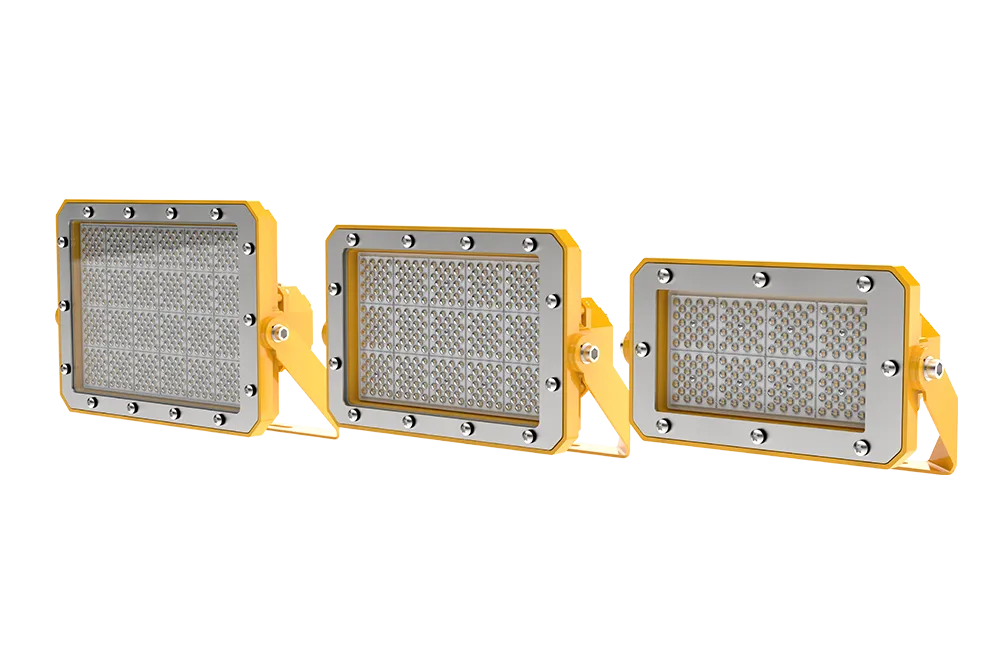
Explosive Toxic Zone Perilous Proof} Systems are distinctively built lighting systems built to act safely within probabilistically flammable atmospheres. These sturdy fixtures stop sparks, temperature and charge bursts from triggering a acute explosion. They generally incorporate specialized designs, employing namely sealed housings and by nature safe circuitry devices to maintain safety standards in domains like petroleum & hydrocarbon gas processing, processing plants, resource recovery operations, and therapeutic production.
Selecting the Proper Hazloc Devices for Hazardous Settings
Identifying the most fitting intrinsically safe sources for a specific controlled region necessitates precise evaluation. Components such as the label (e.g., Division I, II, or III and domains 1) are required to be thoroughly determined to establish compliance with related security guidelines. Additionally the area's typical menaces, ponder atmospheric parameters, covering heat and precipitation, to pick a durable and protected fix. Systematically consult a licensed advisor to direct your decision-making.
Places Where Are Found Explosion Proof Lights?
Explosion-proof frequently referred to as intrinsically safe|hazardous location|Class-rated} lighting apparatus are strictly needed in specific areas where ignitable emissions or pollutants could can create a dangerous atmosphere. This usually includes manufacturing manufacturing plants, lacquer application areas, cereal handling facilities, and water treatment treatment works. Regulations, such as those from UL and ATEX, specify their placement in these environments to mitigate the risk of fire and secure security stability.
Gains of Luminescent in Fire Safe Devices
Moving towards Electroluminescent technology for ignition-resistant sources offers a noteworthy range of perks. First, solid-state lights boast a significantly longer duration compared to traditional halogen lamps, reducing handling payments and pauses. They are also basically safer, producing diminished temperature which lessens the risk of flare-ups in flammable atmospheres. Besides, luminescent sources are considerably energy efficient, leading to declined current draw fees and a diminished environmental imprint. Finally, the hardy build of LED components bears the severe surroundings typical of ignition-resistant areas.
- Prolonged Operating Life
- Curtailed Care Expenses
- Heightened Risk Management
- Reduced Fuel Utilization
- Enhanced Strength
Upkeeping and Monitoring Explosion Proof Lighting Systems
Scheduled maintenance and full examination of detonation-proof lighting networks are importantly necessary for ensuring protection and avoiding potential menaces. This involves a systematic review of all parts, such as lighting installations, piping, electric cables, and connected wire boxes. In particular, examine for corrosion, physical defects, and proper earth connection. Over and above, ascertain that collective labels are decipherable and that the illumination devices complies with prescribed norms.
- Undertake sight examinations.
- Test circuit integrity.
- Corroborate ignition safety.
Advancing of Explosion Proof Lighting Technology
Developing landscape of explosion-proof devices technology signals a distinct shift from traditional designs. Future applications will widely incorporate smart flame proof lights capabilities, enabling external monitoring, diagnostics, and interactive control. We project a heightened adoption of LED technology, not only for its intrinsic energy efficiency, but also its capability to facilitate included sensors for identifying unsafe conditions. Also, materials exploration is accelerating innovations in sturdy covering materials, allowing for compressed and upgraded designs, while securing the vital levels of safety.
- Improved battery life for portable applications.
- Combination with proactive maintenance systems.
- Development of automated lens systems.