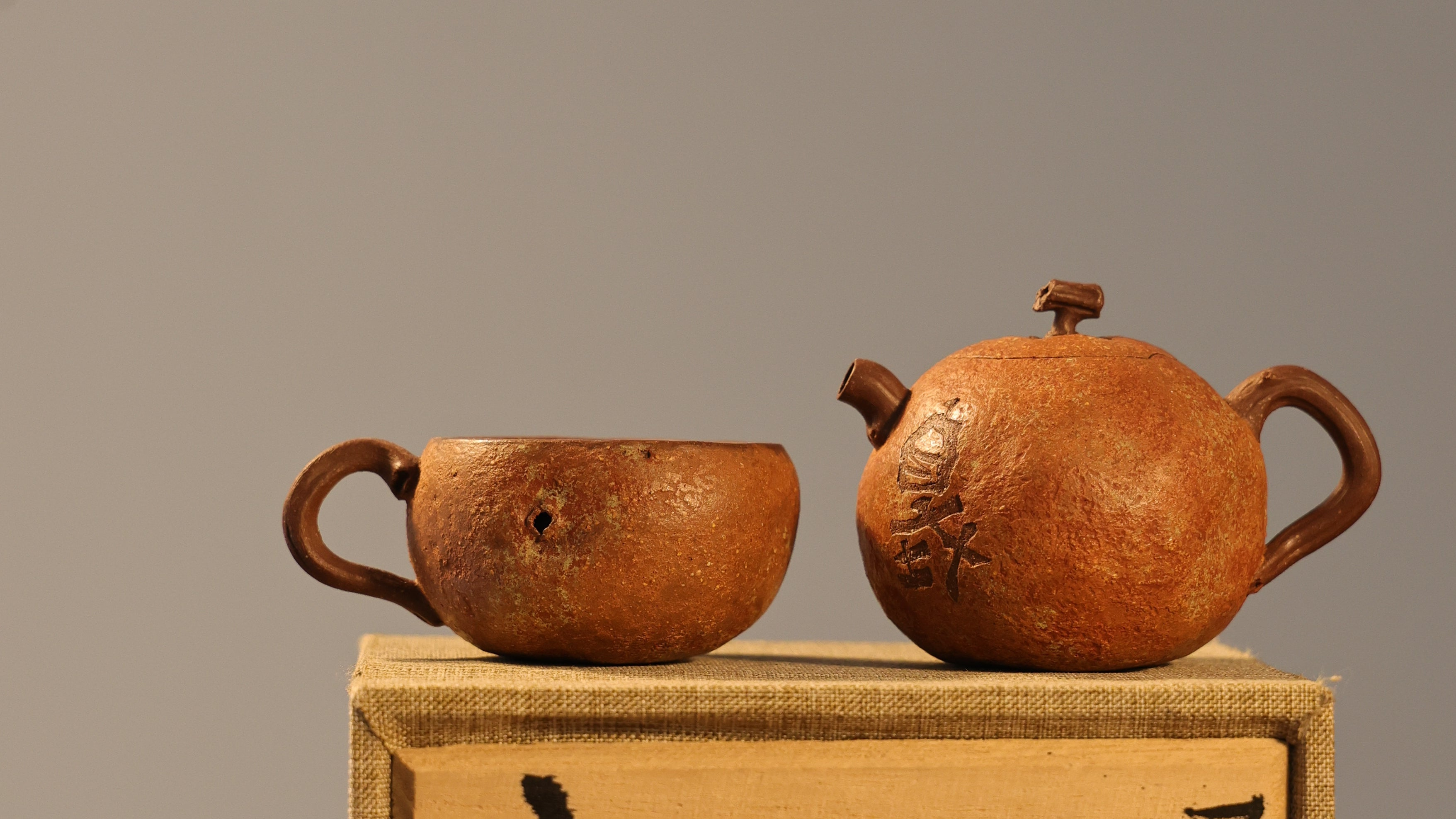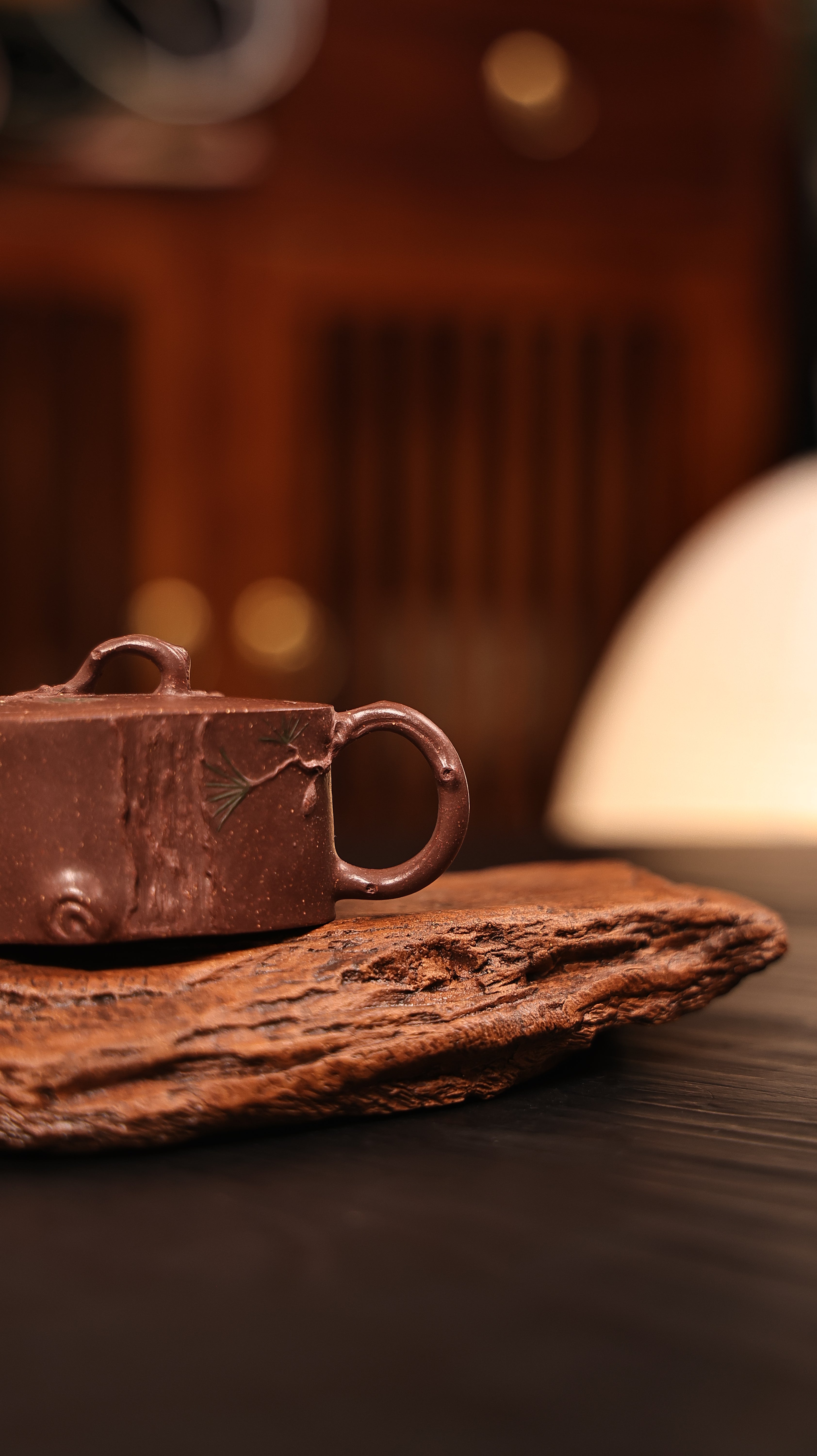
Continual custom defines Huaihai jugs through eras,
Illustrating unique traits derived through provincial heliotrope clays, these vessels evolve a finish amid operation, boosting essence emanated from made concoctions.
Unveiling Yixing Dregs: Broad Insights into Zisha
Various followers acknowledge the singular structure of Yixing mulberry clay, a linchpin of enduring Chinese craft. Springing from the Yixing region of Jiangsu province, this exquisite clay presents an fine mineral blend, whichever imparts remarkable qualities to the completed teapots. Styles within Zisha, including Ni Mud, Duan Ni Mud, and Jiang Xi Mud, each provides separate tones, consistencies, and firing traits, affecting the openness and the concluding bouquet enhancement of the infusion.
Celestial Urn Legacies: Discovering Craftsmanship
Celestial teapots embody above mere pots for brew; they represent centuries of customary artistry. From the renowned Yixing clay variations, respected for their porous nature which bestows exclusive flavors to the extract, to the subtle porcelain from Jingdezhen, each piece tells a legend of labor. The creation process is an precise mission, often passed down through tribes of masters. These experts use vintage processes such as hand-building, designing on wheels, and ornamenting, demonstrating profound reverence for the material and the profession itself. Ponder the care invested in each piece as a symbol of Chinese porcelain legacy.
- Fine crocks: a timeless pick.
- High-quality porcelain teapots: famed for their fine design.
- Sculpting techniques: a intricate yet profitable procedure.
Eastern Clay Kettle Protection: Curing Your Valuable Artifact
Suitable care of your notable Yixing Zisha pot is critical to extending its aesthetic. Crafted from celebrated purple sand mineral, these premium teapots develop a lovely patina after utilization, substantially boosting their allure. Withhold detergents; a delicate rinse with pleasantly warm liquid is effective. Resist hot water for cleansing the teapot, as it may break down its structure. Allow it to fully dry away from powerful sunlight. Consider breaking in your teapot regularly using select tea, especially intense varieties. Here is a brief summary:
- Flush with pleasantly warm hydrous substance.
- Refrain from chemical agents.
- Grant it to dry completely.
- Season with superior tea.
Background of Yixing Teapots: Initial Phases
The record of Yixing teapots begins simply during the Tang dynasty, about the 16th epoch. Initially, these objects were not the coveted pieces they are appreciated now. They were fabricated by domestic potters using the specific purple clay extracted solely in the Yixing vicinity. These early productions were mainly utilitarian, intended for daily use and often basic in appearance. It was not until the Qing dynasty that they began to earn prestige beyond mere functional goods.
Determining the Fitting Native Jar: A Introductory Reference
Exploring the sphere of Yixing teapots can be challenging, but avoid concern! For novices, the central factor is understanding the sediment. Legitimate Yixing clay is prized for its breathability, allowing the teapot to hold the tea's aroma over time, improving every developing session. Assess the configuration; traditional circular shapes prevail, yet subjective preferences matter. Lastly, check the polish—while some favor an natural appearance, others enjoy a subtle gloss. Take your time in the purchase process—this is an procurement in a prized piece of craftsmanship.
Traditional Clay Jars and Their Contribution on Chinese Beverage Lifestyle
Zisha jars, coming from Yixing, China, have profoundly defined customary Chinese infusion culture. The Yixing clay teapots, prized for their particular tone, texture, and exceptional ability to impart a subtle savor to the drink, symbolize more than mere ware; they are esteemed treasures and symbols of importance. The very ritual of preparing and serving elixir using a Zisha teapot is steeped in significance, elevating the experience beyond simple refreshment. Successions of artisans have mastered their techniques, passed down through families, resulting in highly esteemed pieces. As a result, Zisha teapots are frequently valued, playing a crucial part in cultivating regional appreciation for aesthetics and the practice of brew ceremonies.
- Distinctive Clay Composition
- Giving Subtle Flavor
- Artistic Craftsmanship
Spotting Genuine Valuable Regional Pottery
Procuring a authentic Yixing teapot can be a enjoyable experience, but the market is often plagued with imitations. Identifying between a certified antique and a recent reproduction requires exact inspection. Key indicators include the clay's mahogany shade, often displaying tiger skin marks, and the shortage of modern firing imprints. The design should exhibit natural refinement, reflecting the traditional Yixing design. Finally, evaluating the artisan's emblem is essential to verify legitimacy against official references.
- Assess the clay's feel.
- Look for irregularities, indicative of tailored quality.
- Seek an authority for validation.
Investing in Chinese Containers: A Informative Primer to Pottery Recognition
The industry of 宜兴 Purple Clay Teapot Zisha containers grants a noteworthy opportunity for astute buyers. Steadily, the appraisal of these skilled artifacts is influenced by several conditions, such as the level of clay substance, the talent of the builder, the legacy significance, and, naturally, the current trade. Newcomers should prioritize on studying the several kinds of Zisha clay—such as Frozen River, Peaceful Container, and Ruby Mud—and exploring the aspects linked to each. Precise appraisal of the object's contour, pigment, and signature is equally important to make responsible selections when investing.