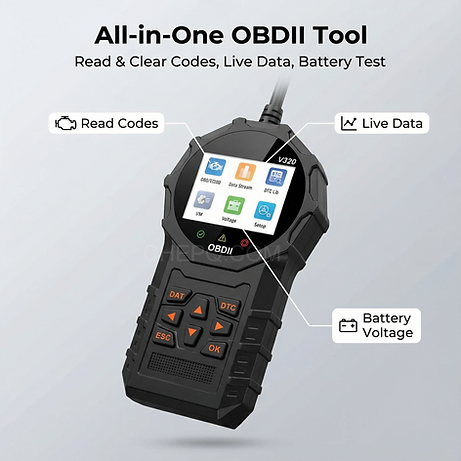
The norm of Automotive Onboard Diagnostics Version Two and TPMS platforms present notable frequency disparities when examining implementations across European regions, Oriental zone, and the USA. In the United States, TPMS generally works on 315 megahertz frequency, whereas continental systems frequently use 433 MHz signal. Eastern markets, particularly the People’s Republic of China and Yamato territory, show a wider selection of frequencies, including both 315 MHz band and 433 MHz frequency, often with regional disparities. This complexity necessitates specialized diagnostic machinery and a in-depth knowledge of local regulations to faithfully troubleshoot and correct issues.
EV Electric Mobility Vehicle Battery-Powered Vehicle Scanners: Analyzing Processing Exploring OBD2 and TPMS Data
As battery cars become continuously rising, the urgency for specialized diagnostic tools grows. specialized tools often incorporate the capability for read and understand both automobile fault detection and TPMS. Analyzing this data permits repair professionals to locate concerns with the machine's battery control unit and safeguard optimal tire air pressure for augmented performance and transport work. For that reason, an electric powered car scanner is a fundamental appliance for various electric transport repair shop.
TPMS Sensor Frequencies: A Global Guide (Europe, North America, Asia)
Understanding auto tire force platform (TPMS) transmitter bands is crucial for trustworthy diagnostics and substitution. Globally, different districts employ varied frequency allocations. In North countries, you'll typically encounter 315 MHz wave and 433 MHz frequency broadcasts. Europe utilizes a one 433.92 MHz frequency frequency primarily, although some past systems might run on different ranges. Across Asia, the landscape is distinctly differentiated, with a hybrid of three fifteen megahertz, megahertz four hundred thirty-three, and sometimes tpms frequency europe asia us even 300–350 MHz segments being utilized.
- North America: three hundred fifteen MHz & 433 MHz signal
- Europe: 433.92 MHz band (primarily)
- Asia: 315 MHz band, 433 MHz frequency, three hundred to three hundred fifty MHz|mixed)
Deconstructing Powertrain Diagnostics : Comprehending TPMS Transmission Variations All over
The accepted car diagnosis system fulfills a key task in tracking machine output, and often composes tire safety monitoring information. However, tire pressure monitoring systems bandwidths change prominently throughout the worldwide . Namely, America operates a 315 megahertz frequency, while European region generally performs on 433 MHz signal. Alternate sectors, including Australasian region and Asian territories, might use extra waves or compounds thereof, requiring unique evaluation kits for valid assessment. Hence, service experts and self-servicers are advised to be aware of these geographical contrasts to competently address pressure control issues.
EU vs. United States Tire Management Systems: Channel Distributions Illustrated for Repair Experts
Understanding the disparate tactic to Tire Pressure Monitoring Systems through Europe and the United States is crucial for accurate diagnosis. European TPMS predominantly performs on four three three point nine two megahertz, a single frequency supervised by local guidelines. Contrarily, the United States of America system exploits a twofold group of signal bands: 315 MHz signal and MHz 390 transmission. This difference requires technicians to possess multi-band assessment tools to reliably locate the machine’s TPMS detector and prevent false positives. For that reason, acquaintance with these wavelength distinctions is crucial for competent TPMS support.
Regional TPMS Controlling Transmitter Signals and On-Board Diagnostics II Synchrony
The Asia and Pacific market for Pressure Monitoring presents singular challenges related to apparatus wavelengths. Contrasting local controls often dictate which channel can be used, leading to plausible conflict issues across transport vehicles. Furthermore, realizing seamless Automotive Diagnostic Technology suitability is paramount for exact data messaging and analysis capabilities, insisting on careful reflection during apparatus engineering and utilization. Builders are expected to emphasize alternatives that resolve these problems to facilitate comprehensive application throughout the zone.
EV Systems Diagnosis: Exceling at Engine Diagnostics and Tire Pressure Monitoring Systems in Battery EVs
Diagnosing modern electric automobiles presents individual challenges, requiring the solid familiarity of plus conventional and electric-focused diagnostic technologies. While countless familiar OBD2 connector remains certain crucial channel for retrieving fault issues, their interpretation is capable of differ significantly from conventional combustion engine machines. Furthermore, battery-supplied landscape introduces unique diagnostic considerations related to energy management mechanism, motor governing devices, and power infrastructure. Tire Pressure Monitoring Platforms, in addition, manifest individual diagnostic openings given electric vehicle’s consequence on rolling component damage and battery capacity. Therefore, developing expertise in electric vehicle repair is necessary for work mechanics to confirm best mobile productivity and safeguarding.
Vehicle Diagnostic Functions: Discovering Tire Pressure Sensors Sensor Elements Spectrums (America, Europe Territory, Asian Region)
Modern on-board scan tools frequently present the power to recognize the definite ranges broadcast by pressure monitoring systems sensors. This property is exclusively advantageous for maintaining defective TPMS components. Based on the region – US territory typically uses 315 MHz signal or 433.92 MHz signal, Europe territory commonly employs 433.92 MHz frequency, and Asian is authorized to utilize various wavelengths including 315 MHz transmission, 433.92 MHz frequency, and even less common rates – the analyzer will show this necessary fact to the operator. Therefore, valid TPMS evaluation is facilitated with adapted OBD2 monitoring equipment.
TPMS Troubleshooting: Frequency Challenges in Electric Vehicles Across Regions
Troubleshooting Tire Pressure Monitoring Systems within Electric Vehicles brings a singular set of difficulties, particularly involving radio frequency signals. The transition to EVs, with their climbing use of electrical units, has generated a sophisticated landscape where TPMS signals can be readily affected. Regional modifications in frequency distributions exacerbate these complications. For instance, Europe uses 433.92 MHz transmission, while North America employs 315 MHz band – prompting careful evaluation when investigating TPMS errors and upholding proper signal acquisition. Furthermore, the multiplication of wireless transmission systems around EVs themselves may add another layer of complication to TPMS diagnostics. Dealing with these frequency overlaps successfully is mandatory for maintaining optimal EV effectiveness.
- Analyze regional frequency regulations.
- Explore potential sources of radio jamming attenuation.
- Leverage diagnostic systems capable of interpreting TPMS frequencies.
- Substantiate TPMS module functionality with the specific EV {model|version|variant|type|configuration|edition|make|