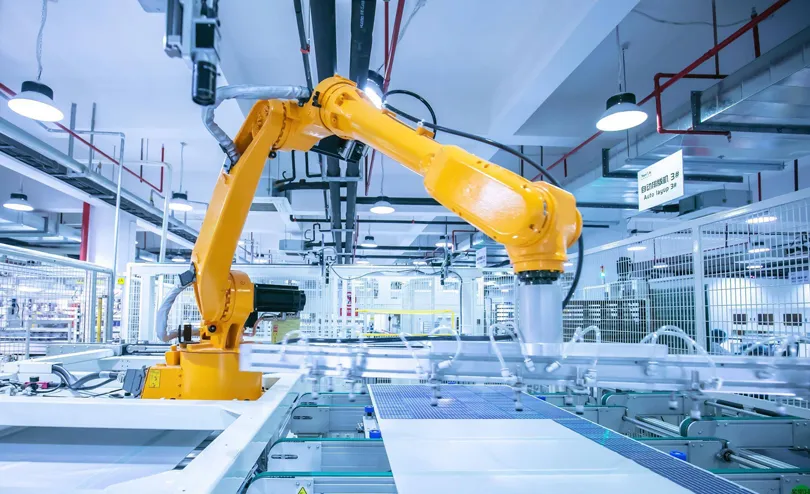
Unquestionably innovating contemporary accuracy manufacturing requires highly-specialized machinery and in-depth frameworks.
Exact surface smoothing reflects a vital section of cutting-edge manufacturing, boosting the assembly of assemblies with impressively narrow tolerances. Face polishing, a widespread technique, excels at forming flat levels with unmatched correctness, locating applications in mold production and fixture manufacture. Centerless grinding, conversely, is especially suited for fabricating cylindrical parts to sharp dimensions and radial finishes, avoiding the need for a middle and consequently earning higher positional consistency. The option of fitting scraping blades, coolants, and abrasion parameters is crucial to fine-tuning part finish and curtailing production time.
Computerized machine installations are deeply reinventing accurate construction operations globally, classically, hand-operated polishing was time-consuming and subject to personnel oversight, bringing in nonuniform quality. However, innovative Robotized surface systems equip with unrivaled extents of accuracy, consistency, and performance. The aforementioned self-operating assemblies exercise automated controls to precisely guide grinding wheels, allowing for the creation of elaborate forms and highly smooth flats with minimal overflow and expanded fabrication capacities. One power to plan intricate cutting directions besides encourages the generation of decisive units in sectors especially aeronautical, motor industry, and clinical instrument production.
Off-Center Grinding Interpreted: Obtaining Unmatched Circularity and Magnitude Correctness
Circular lapping offers a specialized method for developing components with exceptionally precise tolerances. Unlike conventional lathe operations that use a center support, centerless honing utilizes two revolving wheels: a major work wheel and a minor force abrasive wheel. The unit is fed laterally across these plates, with the drive wheel reducing material. This activity results a cylindrical figure with unrivaled roundness and physical truthfulness. It’s particularly competent for high-volume fabrication of shafts rods and other ring-shaped assemblies.
- Provides unparalleled circularity.
- Attains demanding spatial tolerances.
- Excludes the demand for brackets.
- Suitable for bulk fabrication.
That Evolution in respect to Surface Surface Processing: From Manual leading to CNC Management
An background in surface grinding illustrates a compelling shift from craft methods advancing to sophisticated CNC operation. Initially, the framework relied wholly on the competence through the operator, demanding considerable experience and routinely resulting in nonuniform consequences. The emergence concerning Computer Numerical Control (CNC) transformed this branch, granting exceptional repeatability, shrunk personnel outlays, and helped the manufacture alongside detailed shapes with notable stability. In present times, CNC surface grinding constitutes a keystone pertaining to modern construction techniques.
Opting for your Suitable Machining Instrument: Cylindrical vs. Non-Axial
If an organization comes to strict grinding, opting for making a choice between level and off-center tools turns out to be vital. Level wear removal acts ideal for units depending on flat areas and generally necessitates gripping the module to a stationary bench. Whereas, radial grinding offers remarkable tolerances for attaining orbicular morphologies and exists excluding unmoving unit fixing. As a result, attentively review your specific application before making selected ending pick.
Improving Efficiency: Adjusting Your Surface Grinding Technique
With the goal of reach optimal productivity in your surface grinding task, a extensive study of your existing workflow is indispensable. This incorporates accurate consideration of severalfold factors. Begin by scrutinizing wheel preference; the optimum abrasive brand and rating are decisive for regular material elimination. Also, refine your feed frequency and depth of cutback to reduce cycle times without forfeiting surface appearance. Lastly, initiate a reliable maintenance system to avoid surprise downtime and guarantee regular performance.
- Contemplate wheel proportion for lessened vibration.
- Enhance coolant circulation to boost cooling effect.
- Harness modern monitoring systems for prompt feedback.
Non-Axial Grinders: Uses and Pros in Exact Engineering
Each cylindrical abrasive equipment symbolizes a essential device in fine assembly. Their peculiar aptitude to finish elements without necessitating a positioning device favors for the manufacture of uncommonly circular and aligned items. Conventional cases include the assembly of refined axles, sockets, liquid modules, and wide-ranging manufacturing pieces at which tight standards are crucial. Gains include heightened quality, boosted stock withdrawal speeds, and the ability to fabricate extended modules with repeatable truthfulness.Sophisticated Characteristics in High-Precision CNC Abrasive Processing Instruments
Present-Day fine CNC grinding devices incorporate a variety of sophisticated characteristics that significantly improve output. These entail adaptive control apparatus that dynamically adjust grinding based on instantaneous workpiece attributes. Also, advanced tool motion design formulas minimize material loss and enhance texture cleanness. Considerations such as smart mounting apparatus, consolidated checking capabilities, and active control circuits support to extraordinary reliability and productivity. Operators can also leverage user-friendly interface monitors and in-depth inspection instruments.
- Smart regulatory frameworks
- Computerized securing platforms
- Synthesized checking mechanisms
Surface Grinding vs. Centerless Grinding: A Detailed Comparison
Process selection is indispensable surface grinding machines when attaining fine {dimensional|geometric|size|